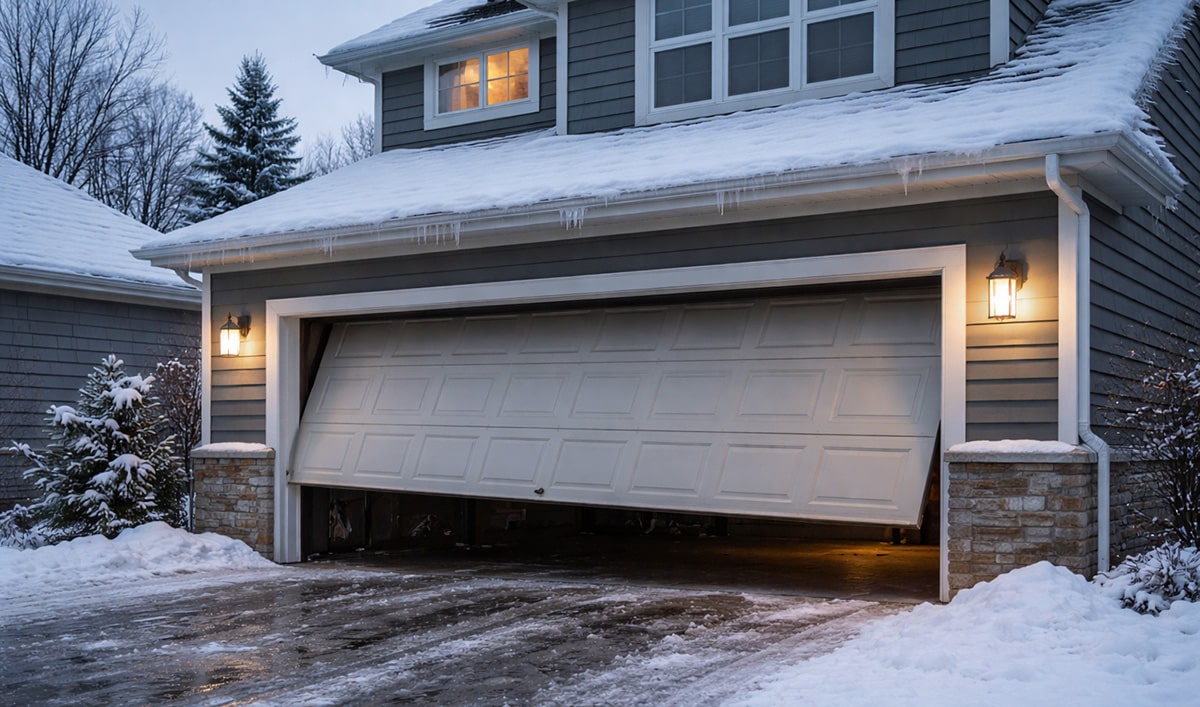
Why Does My Garage Door Get Stuck in Cold Weather? Common Causes and When to Call for Service
A garage door can get stuck in cold weather because ice has frozen the bottom seal to the ground, lubrication is no longer working well, or worn rollers and other components are creating resistance. A spring or balance problem can also make the door struggle. If the door opens but will not close, an obstruction or safety-sensor issue may be involved.
Cold weather can cause a temporary problem, such as a frozen seal. It can also expose wear that was already developing. Repeatedly running the opener or forcing the door is not a safe way to find the cause.
Why does a garage door work in mild weather but struggle when it gets cold?
Lower temperatures can change how lubricants and flexible seals behave. Metal components also expand and contract with temperature changes. A door with dry moving parts, worn rollers, or an existing alignment problem may have less tolerance for that added resistance.
In Metro Detroit, a wet driveway followed by an overnight freeze creates another problem: water or slush can freeze where the bottom weather seal meets the concrete. Snow carried into the garage on a vehicle can contribute moisture near the opening, even after the driveway has been cleared.
A seasonal pattern is useful information, but it does not prove that the weather is the only cause. A door that works again in the afternoon may still need service for recurring morning problems.
What commonly causes a garage door to stick in winter?
The bottom seal is frozen to the ground
If the opener starts but the closed door barely moves, look for ice along the bottom edge without reaching underneath it. Moisture can bond the weather seal to the concrete, holding the door down while the opener tries to lift it.
Stop operating the opener if you suspect the door is frozen shut. Continuing can damage the seal or place unnecessary strain on the opener and door connections. Clear loose snow around the closed door without striking it, prying the seal, or reaching into the opening. If the ice bond remains, arrange service or allow natural thawing if you can safely leave the door closed.
Recurring freeze-downs warrant a look at the seal and the source of water near the threshold. A new seal alone will not correct a drainage problem.
Lubrication or worn moving parts are increasing resistance
A door that moves slowly, squeaks, or hesitates through much of its travel may have dry hinges, worn roller bearings, or unsuitable lubricant buildup. Some lubricants become thicker in cold temperatures. Adding more product without identifying the problem can leave a door just as difficult to operate.
Lubrication requirements vary by component and manufacturer. Roller bearings, nylon roller surfaces, hinges, and opener drive systems do not all receive the same treatment. Use the door and opener manuals rather than spraying every moving part. An older screw-drive opener, for example, may require a specific low-temperature lubricant.
Do not coat the door tracks with grease as a general fix for sticking. Track damage and worn rollers need inspection; lubrication cannot correct their shape or alignment. For a door already struggling, let a technician identify the source of resistance before attempting maintenance.
A weather seal is stiff or rubbing against the door
A bottom or perimeter seal can become less flexible in cold weather. A damaged, displaced, or overly tight seal may drag against the door as it moves. This differs from a seal frozen to the driveway: the resistance may continue after the door has started opening.
Look for visible tears, displaced weatherstripping, and areas where a seal appears caught against a panel. Do not pull on the seal while the door is moving or remove hardware to free it. A technician can determine whether the seal needs replacement or its fit needs correction.
Rollers or tracks are binding
A door that repeatedly catches at the same point may have a damaged roller, bent track, or alignment issue. Dirt and debris can interfere with travel, but a visible obstruction should not become a reason to reach into the track or loosen its mounting hardware.
Uneven movement is especially concerning. If one side rises ahead of the other or a roller appears outside the track, stop using the door. Altech's residential garage door repair services address track, roller, cable, and related mechanical problems.
The spring system or opener needs attention
Garage door springs counterbalance the door's weight. If a spring breaks or the system is out of balance, the opener may struggle because the door is no longer properly supported. A loud bang followed by a door that barely lifts, a visible gap in a torsion spring, or a hanging cable calls for professional service.
An opener can also have a drive or electrical fault. The motor humming or running without normal door movement is a symptom to report, not a reason to keep trying the button.
Leave balance testing and spring-system work to a technician when the door is stuck or behaving abnormally. Do not adjust springs, cables, cable drums, or bottom brackets. Those components can be under dangerous tension.
Why will my garage door open but not close when it is cold?
When a door opens normally but refuses to close or reverses, check for loose snow or an object in the opening. Ice at the threshold can prevent full closure. The photo-eye safety sensors near the floor may also have dirty lenses, moisture on the lenses, or an alignment problem.
If the door is stationary and you can reach the sensors safely, gently wipe the lenses with a soft, dry cloth. Observe the indicator lights and consult the opener manual for their meaning. Do not move the brackets, repair wiring, or bypass the sensors to make the door close.
Reversal does not always mean the photo-eyes are responsible. Mechanical resistance or a travel-setting problem can produce similar behavior. If removing an obvious obstruction and cleaning the lenses does not resolve it, stop troubleshooting and schedule an inspection.
What can homeowners safely check?
Keep checks visual and accessible from the floor. You can:
- Look for ice, loose snow, or objects around the threshold and sensor beam.
- Observe visible seal damage, a crooked door, or a hanging cable without touching components.
- Note where the door stopped, any unusual sound, and any opener error code already displayed.
- If the door otherwise operates normally and only the remote or keypad is unresponsive, check its battery according to the manual.
Avoid repeatedly cycling a struggling door to reproduce the problem. Keep people and pets clear, and do not stand or walk under a door stuck partly open. Do not increase opener force to overcome resistance or disconnect a partly open door from the opener. It could fall if the lifting system is damaged.
When should you call for garage door service?
Call promptly for a crooked or off-track door, frayed or hanging cables, a suspected broken spring, grinding, or a door stuck partly open. Stop using the system until it has been evaluated.
Recurring cold-weather hesitation also deserves service, even if the door eventually completes its travel. Tell the technician whether it fails while opening or closing, whether ice is visible, and whether the problem disappears when temperatures rise.
Altech's article on garage door tune-ups versus repairs explains how maintenance and repair address different needs.
Can preventative maintenance reduce winter problems?
Preventative maintenance can address avoidable resistance and identify worn components before colder weather makes them more noticeable. Altech's residential preventative maintenance and safety inspections include checks of door balance, moving hardware, seals, opener operation, and safety features.
Maintenance cannot guarantee that a door will never freeze down or that a part will never fail. Between visits, keep loose snow and slush away from the closed door and report changes in operation. For broader seasonal preparation, see Altech's winter garage door maintenance tips for Michigan homeowners.
Frequently asked questions
Does a sticking garage door mean I need a new opener?
No. Ice, worn rollers, track problems, or an unbalanced door can make a working opener struggle. Have the full door system inspected before deciding that the opener needs replacement.
Is there a temperature below which garage doors stop working?
There is no single cutoff for every door and opener. Equipment specifications, lubricant selection, moisture, and component condition all matter. A door that repeatedly stops during cold weather should be checked rather than treated as normal winter behavior.
Will an insulated garage door prevent sticking?
Insulation reduces heat transfer through the door, but it does not repair worn hardware, correct balance, or eliminate water at the threshold. An insulated door can still freeze shut or develop mechanical problems.
Can I pull the emergency release to free a stuck door?
Do not use the emergency release to free a partly open, crooked, or damaged door. It could move or fall unexpectedly. Manual-release procedures depend on the opener, and a stuck door may have a lifting-system problem. Ask a technician for guidance before disconnecting it.
What should I have ready when scheduling service?
Describe the problem and have the door or opener model available if you can identify it safely. Photos taken from a safe distance and an error code already displayed can help. You do not need to run the door again to collect evidence.
Get the cause checked before the problem repeats
If your garage door is sticking, struggling, or repeatedly having trouble in cold weather, Altech Doors can inspect the system and determine whether maintenance or repair is needed. Contact Altech Doors about residential garage door service or call (734) 525-0875 to describe what is happening.